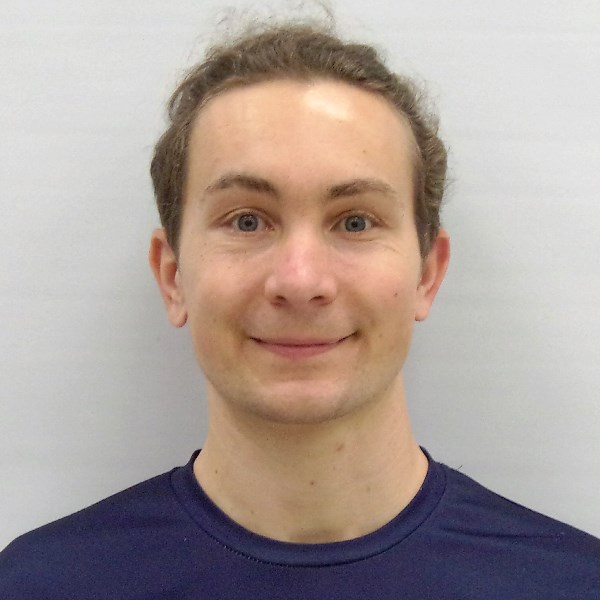
Oleksandr Skorokhod

Oleksandr Skorokhod

Ph.D.

Languages for professional communication:

Ukrainian, English

Description of the field of scientific research:

Oleksandr's research interests include cell signaling systems, protein synthesis in cells, protein-protein interactions, cancer transformation, and wearable devices. He also conducts epidemiological studies of the impact of physical activity on life expectancy, studies physical activity and neurobiology, and public health and education policy.

His areas of interest include sports physiology, thermoregulatory physiology, and the use of VR (virtual reality) for human physiology research.

List of duties:

Oleksandr is a researcher at the Center for Longevity at Stanford University. The main focus of his research project is increasing physical activity among children and adolescents through educational tools and the modern technologies.

Professional experience:

From 2007 to 2012, Oleksandr worked as a postgraduate student at the Institute of Molecular Biology and Genetics of the National Academy of Sciences of Ukraine. From 2010 to 2014, he was a junior researcher at the Institute of Molecular Biology and Genetics of the National Academy of Sciences of Ukraine. Since 2014, Oleksandr has been a researcher at the Institute of Molecular Biology and Genetics of the National Academy of Sciences of Ukraine. Since 2022, he has been a researcher at the Center for Longevity at Stanford University. In addition, from 2014 to 2019, Oleksandr was the Chairman of the Council of Young Scientists of the National Academy of Sciences of Ukraine; from 2015 to 2016, he was an expert in the group Science and Innovation – Reanimation Package of Reforms, Preparation of the Law on Scientific and Scientific and Technical Activities, and from 2021 to the present he is a scientific editor at the Nash Format publishing house.

Keywords:

  • Biochemistry

  • Science popularization

  • Book writing

  • Biology

  • Science policies

  • Physical culture and sport

Scientific projects:

  • The New Map of Life

    In 2018, The Stanford Center on Longevity launched an initiative called The New Map of Life, believing that one of the most profound transformations of the human experience – longevity – calls for equally momentous and creative changes.

    Role:

Basic scientific publications:

  • Generation and characterization of monoclonal antibodies to TDRD7 protein

    O Skorokhod, I Nemazanyy, O Breus, V Filonenko, G Panasyuk, Hybridoma 27 (3), 211-216

    Role: Author

  • Adaptor protein TDRD7 is co-localized with ribosomal protein S6 kinases S6K1 and S6K2 in cell lines of different tissue origin

    OM Skorokhod, AI Khoruzhenko, VV Filonenko Вiopolymers and Cell

    Role: Author

Contact a scientist

Fill out this form to contact the scientist directly