Psychedelic-Assisted Therapy: who it helps and how to do it right
Psilocybin, MDMA, and ketamine are mentioned more and more often in research on new approaches for the treatment of mental disorders, in particular, posttraumatic stress disorder, depression, and anxiety. Clinical trials of psychedelic-assisted therapy (PAT) are underway, and some countries already permit its experimental medical use.
In Ukraine, doctors and researchers have been discussing this topic for several years. But the legislature doesn’t change quickly, so for many people, these approaches remain unavailable within the Ukrainian healthcare system, and they look for help abroad.
This is what happened to Dmytro, a combat medic, who, after traumatic episodes he experienced at the frontlines, went to Spain for a recovery program that included psilocybin use. His experience shows why these methods are gaining increasing attention and, at the same time, why professionals call for a more cautious approach.
After a couple of minutes, the music starts. Dmytro closes his eyes. Before this, he took a dose of psilocybin mushrooms, a substance that changes perception, intensifies emotions, and may trigger very intense internal experiences. “Your task is simply to stay inside the experience,” he explains. “The longer you keep the mask on and don’t get distracted with the outside world, the deeper you go.”
The 31-year-old Dmytro, a paramedic in the evacuation unit of one of the Special Operations Forces' centers, has served on an island in the Ukrainian South, where combat was fierce. “It was an enclosed space, constant shelling, the tension. Over six months in this mode is a great load on your nervous system,” he says.
After returning from the frontline, Dmytro began seeking psychotherapeutic help. For a time, he was working with a psychotherapist, but he felt that the process was too slow. At the same time, he’s long been interested in research on psychedelics, but rather from a cultural and anthropological point of view. He read books on altered states of consciousness and on how different cultures used psychoactive substances in their rituals and medicine. Later, he came across an opportunity to go abroad for a recovery program, in which people sometimes used psychedelic substances in addition to psychological support. This is how Dmytro ended up in Spain.
Before the session, participants spend a couple of days relaxing: without alcohol, caffeine, or heavy food. They go on walks, talk to facilitators, and try to relieve tension after the combat experience. “In essence, you just exhale,” Dmytro says, “especially if you’ve been at the frontline for a long time.”
During the session itself, a person lies with eyes closed, listening to music and living through an internal experience that may last for a couple of hours. “You live through things you couldn’t live through earlier. Grief, sadness, saying goodbye to those who are no longer with us. It’s very emotional,” he describes.
After the session, an integration period begins. This is the time when the person attempts to make sense of the experience. Dmytro says that during the next couple of weeks, he started to feel the change: “It’s as though a weight is lifted off your shoulders. You feel a surge of energy, you want to do something, to create something, to communicate with people. What can be better than when you feel alright and don’t relapse? When you don’t have meltdowns and are able to fully live through experiences of your human soul?”
Dmytro has inspired many of his battle comrades, and, having a medical degree, he became a sitter himself after undergoing a series of accreditation procedures. However, in this field, it’s important to do everything right, and you can’t do it without the help of psychiatrists who are experienced in the method because the results aren’t always that good.
What happens in the brain?
Viacheslav Zaiika, a psychiatrist who studies psychedelic-assisted approaches in psychotherapy, wasn’t eager to talk to us. He’s tired of the media attention to the topic, he says: any loud public discussion may turn a serious scientific issue into another surge of stigma. Similar things happened before in the US, when a surge of interest in psychedelics in the 1960s ended with almost total prohibition of research on the topic for decades. Still, Viacheslav did explain to us what really happens to the brain during these experiences.
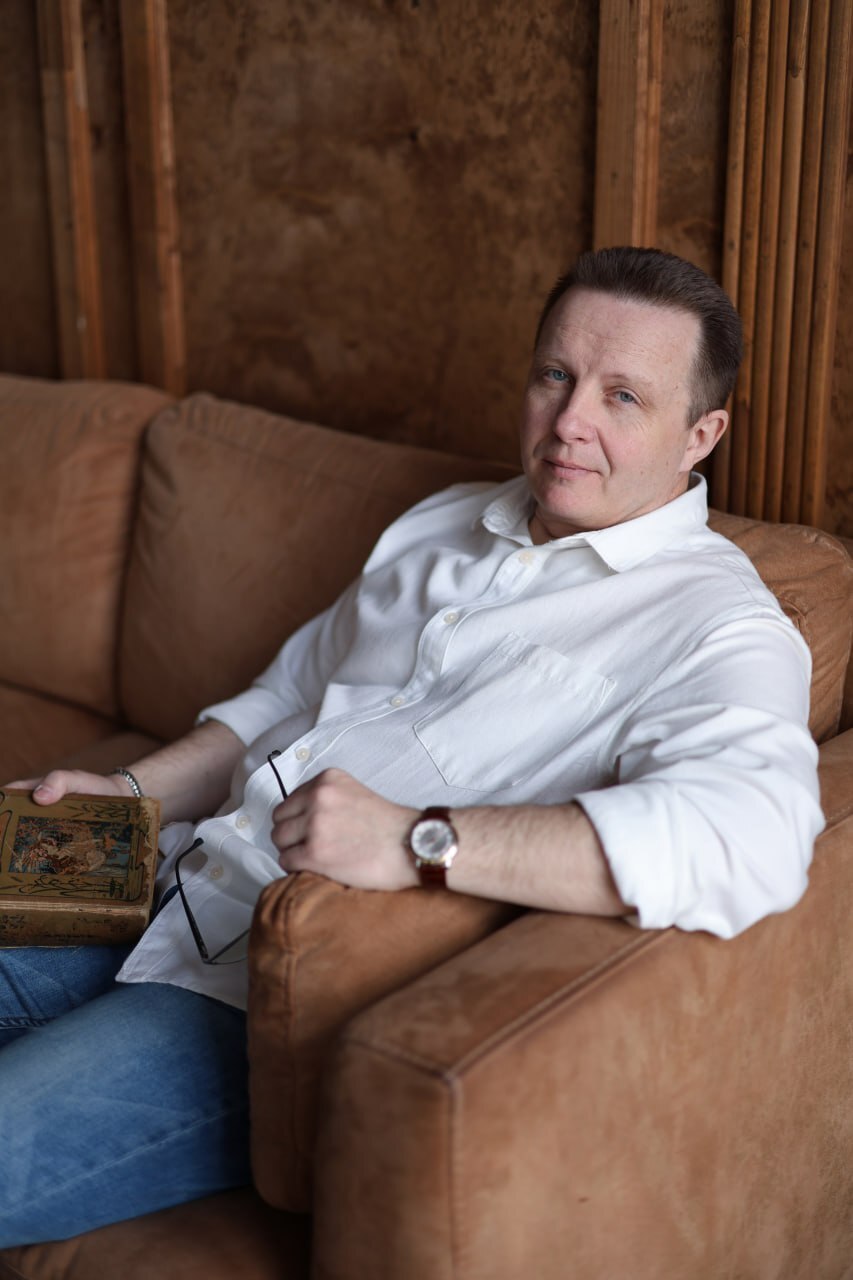
In particular, psychedelics enhance neuroplasticity, the brain’s ability to rewire its neural networks. “More synapses start forming, more neural pathways get activated, the brain becomes more flexible and pliable to a change of perspective, perception of information, and adapted for effective psychotherapeutic learning. So the brain becomes more open and receptive to change. If a person keeps doing the inner work and there’s further integration in psychotherapy, these changes will start to take hold,” the psychiatrist explains.
The psychological dimension of this kind of experience is also important because the person undergoes a very strong emotional experience; sometimes it’s so intense that it can form a new dominant emotion and change the meaning of the previously negative dominant emotion created by the traumatic experience. That’s why psychiatrists don’t talk about just the substance, but about a combination of biological changes in the brain and the psychological process that takes place during and after the experience.
Not everything is PAT that involves psychedelics
Despite Dmytro’s positive experience, experts caution: these kinds of experiences shouldn’t be automatically labeled as psychedelic-assisted therapy. Oleh Orlov, a co-founder of the Ukrainian Psychedelic Research Association (UPRA), emphasizes that, in a scientific and medical context, this term has a rather strict definition. “Psychedelic-assisted therapy has to take place in a medical context, at the hospital, with a registered drug, with trained people, and with psychotherapeutic support,” he explains.
It’s not just about using a certain substance. In clinical trials, PAT is a complex therapeutic process that involves patient selection, preparation for the experience, the session itself, and further integration of the experience with a psychotherapist. The role of a professional in psychedelic-assisted therapy may differ significantly depending on the substance, the condition of the patient, and the therapeutic method itself. In some models, the person mostly undergoes the experience on their own, and the professional’s role is to support them and help them avoid dwelling on individual experiences. In others, in particular, in MDMA-assisted therapy of PTSD, the therapist may help the person more actively return to the traumatic experience and process it more safely.
“Not everything that has a therapeutic effect is psychedelic-assisted therapy. There are various recovery programs, healing communities, and retreats. It may be a useful experience for a person, but it’s a completely different context,” he says. In non-clinical or not fully legal environments, it’s difficult to verify the qualifications of those conducting the sessions, and under the intense altered state of consciousness, a person can be very suggestible. “Sometimes, there can even be pseudoscientific or outright dangerous interpretations of the experiences; for example, explaining psychological states through workings of 'demons' or supernatural forces,” Oleh Orlov says.

The lack of medical control is a separate issue, the professional says. The person may be ignorant of contraindications, interactions with other medications, or even the drug’s actual composition. Some psychedelic substances can affect the cardiovascular system, raise blood pressure, or be hazardous to people who are prone to psychotic or bipolar disorders. Also, without proper supervision, the intense experience can retraumatize, Orlov says, and in some cases, trigger severe mental conditions in vulnerable people.
Oleh emphasizes that the distinction between clinical and non-clinical environments isn’t meant to devalue the experience of the people it helped, but rather to avoid distorting scientific and medical terms. Legal context makes the situation even more complicated: most psychedelic substances are listed in Schedule I of the UN’s international conventions, the most strictly controlled group of drugs. In Ukraine, this list is essentially equated with the list of prohibited substances. “According to international conventions, scientific research and limited medical use of these substances are permitted. In Ukraine, however, only scientific use is permitted, and even then, the procedures for such use are still not developed,” he explains.
As a result, there is next to none proper scientific research in this field, and access to new treatment approaches remains very limited. So people who are looking for alternative ways to get help often turn to foreign programs or half-legal models.
But this doesn’t mean that there is no research in Ukraine at all. One of the examples is ketamine, which is registered as a medical drug and is used in anesthesiology. Psychiatrists sometimes use it off-label, which means outside of its approved indications, including for the treatment of depression and PTSD. Similar research has already been conducted in Ukraine.
In the Forest Glade Clinic, where Viacheslav Zaiika works, the research on the use of ketamine-assisted psychotherapy among the veterans with resistant depression and PTSD symptoms was conducted; these were cases where no other treatment method was effective. 27 patients participated in the trial. The therapy course consisted of 1 to 4 ketamine infusions combined with preparatory and integrative psychotherapeutic sessions. After the course, a significant decrease in depressive and PTSD symptoms was recorded for all participants, and over 50% reached either a significant clinical improvement or a full remission. The positive effect persisted a month after the therapy.
You shouldn’t do this haphazardly
Despite all the promising research results and individual positive stories, experts emphasize that psychedelic methods can be easily undermined if we narrow them down to the drug itself. Viacheslav Zaiika stresses that the therapeutic effect in these cases isn’t triggered by the substance itself, but rather by the whole process that accompanies it. “Psychotherapy, not the substance, plays the key role,” he says.
In clinical trials, psychedelic-assisted methods involve a couple of stages. The first is patient selection. Before participation, people undergo psychiatric screening, physical condition assessment, medication analysis, and screening for possible contraindications. The second stage is preparation. The person works with a psychotherapist before the session; they discuss their current state, create a request, and prepare for possible emotional experiences. The third stage is integration. After the intense experience, work with the material that has surfaced during the session continues. This stage may last for months and is no less important than the experience itself. Without it, the effect can be less persistent or even problematic. That’s why the experts often stress: you can’t look for quick solutions for difficult psychiatric conditions in psychedelic drugs.
“It’s not a magic pill. It’s a process that requires preparation, supervision, and further effort,” Zaiika explains. Otherwise, he says, the risks may outweigh potential benefits. “You should perform a surgery in the operating room, not in a kitchen.”
That’s why any discussion of psychedelic-assisted approaches requires accuracy and caution. On one hand, more and more research shows the potential of these methods in the treatment of resistant depression, PTSD, and other mental disorders. On the other hand, an incorrect use of, or a simplistic notion of, a “magic substance” may quickly marginalize the topic and delay meaningful scientific development in the field.
For Ukraine, this discussion is especially relevant. Full-scale invasion means that thousands of soldiers and civilians have already faced traumatic experiences that require long-term support. In these circumstances, any delay in research and creating legal mechanisms for access to new therapeutic approaches has real consequences. The need for help doesn’t go away, and if the healthcare system doesn’t offer safe, controlled options, people start looking for them elsewhere, often in gray or illegal areas.
And even though psychedelic methods aren’t a universal solution and require strict rules, medical control, and proper research, at the same time, they may become one of the instruments to help people for whom other methods have not been effective enough.
The reportage is published with the support of the Alfred P. Sloan Foundation.