Restoration of Science: Olena Tsyplitska's Blog
29.08.23
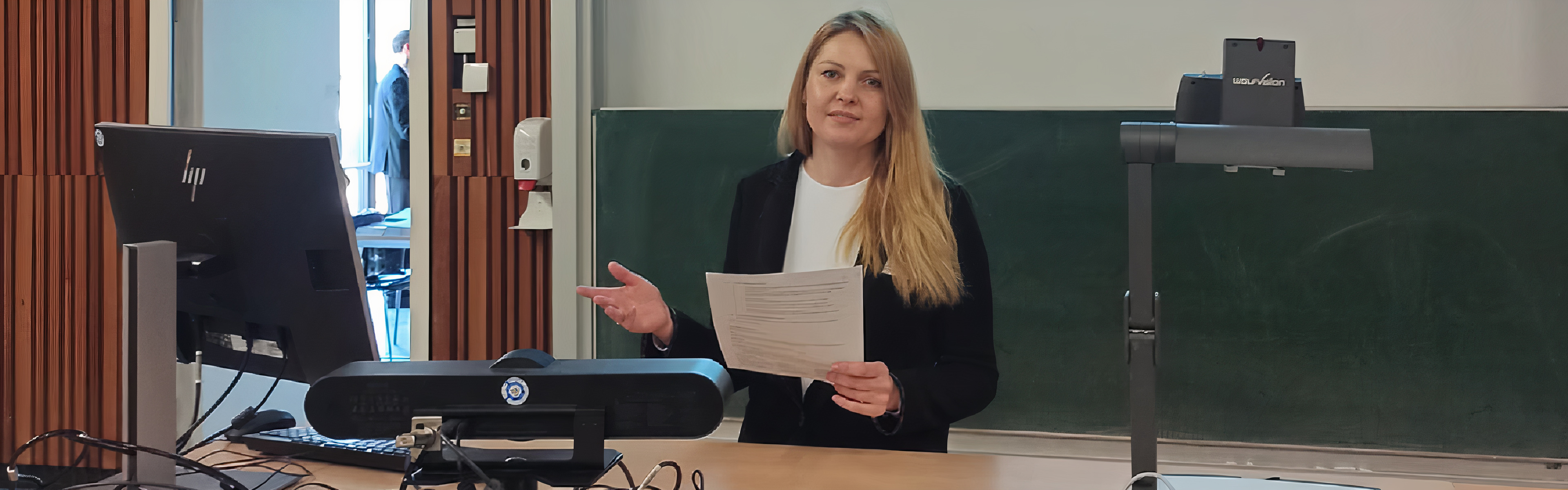
Olena Tsyplitska is a Doctor of Economic Sciences. In recent years, she has been researching the effectiveness of industrial policy tools and spatial aspects of industrial development. One of her areas of work is supporting startup ecosystems at national and local levels. So, Olena is not just a researcher, but also a trainer in the "Booster of Innovative Projects" program for scientists who aim to commercialize their developments. She focuses on the "Reboot" direction in the Science At Risk project. What the working group has already achieved in this direction and what is still planned, she tells in her blog.
Considering the critical state of the science and innovation system in the conditions of war, I decided to join the Science at Risk project and contribute to creating prospects for the future of talents who wish to realize themselves in science.
In Science At Risk, my colleagues and I are working on the "Reboot" direction. This direction requires not only analytical skills, but also visionary abilities – the ability to assess the current state of affairs and envision potential prospects and development scenarios.
For me as an industrial development expert, this direction became a priority, and I chose it when filling out the questionnaire to participate in the project. Because the country's restoration must be comprehensive, industry and other sectors of economic activity should work in tandem with science to overcome the gap of pre-war deindustrialization and set the pace for innovative changes. I believe this is the only way to transition qualitatively from "catching up" with the leading countries to a strategy of moderate advancement or even proactive leadership.
In the "Restoration" direction, I am participating in writing two white papers dedicated to the development of human capital and the science and innovation system. In the latter, I also serve as a coordinator.
While conceptualizing the restoration of science at the systemic level, one of the most significant challenges was selecting the title. According to our research team, it should highlight both the goal of transforming the science and innovation system itself and the role and purpose of this transformation for the post-war recovery, not only for science but also for the entire country. The diversity of perspectives on these matters hasn't led us to a final version of the book's title yet, and the working version currently sounds like "Scientific Support for Post-War Recovery Through the Transformation of the Science and Innovation System." Yes, it might sound complex and intricate for now.
What do we aim to bring to light on this topic? How to overcome the critical problem – the mismatch between institutional conditions of the science and innovation system and the tasks and challenges of the post-war recovery.
Research methods were chosen based on the necessity to comprehensively study the issues – from analyzing existing publications and statistical data (desk research) to conducting our own field research through expert interviews, surveys, and focus groups.
Most of the activities related to the primary data collection have already been fulfilled. These results are the most intriguing as they reflect not only the specific considerations of experts related to science and innovation but also their attitudes, which are crucial for shaping the vision of the future of science.
A series of interviews and focus groups have shown that our scientists and experts face daily:
— Problems of bureaucratization of science and education;
— Misunderstanding of contemporary processes, particularly in the realm of international project implementation, by the leadership of scientific institutions and universities;
— Technical and financial issues in conducting research and implementing international collaborations.
At the same time, experts clearly understand what tools can be used to improve the situation in science, what changes should be introduced in legislation, and what barriers will still need to be dealt with for a considerable time.
Another insight is that specific experts' positions differ radically regarding the role of state financing, who is responsible for establishing links between science, the government, and business, and how a new management structure in science should be built.
Therefore, forming a harmonious and coherent document is challenging for us. We are still discussing the contours of our vision for the post-war recovery of science, but with each meeting, we increasingly agree on the expressed ideas and thoughts. This is particularly important when a clear government vision is absent — both for the post-war economic recovery and for the country's development of science and innovation.