Stolen museum. Kherson
01.03.23
Kherson is the only regional center in Ukraine that the Russians managed to occupy during the full-scale invasion. Unfortunately, it was under occupation for quite a long time, and the retreat of the Russians was planned and gradual. This gave them the opportunity to steal not only washing machines, but also cultural heritage. They called this theft “evacuation,” rather in line with their newspeak of calling the war “a special operation,” and retreat — “a gesture of goodwill.”
When it comes to theft of monuments to Suvorov or Ushakov or the remnants of Potemkin, this is indeed historically fair — let Russians take away the remaining markers of their imperialism. But they did not stop there and looted the art and local history museums as well.
In the latter, they were helped by the director, collaborator Tetiana Bratchenko. When the occupiers captured the city, she did not follow the instructions and did not transfer the most valuable exhibits to the fund storage — instead, she ordered the dismantling of the exposition dedicated to the anti-terrorist operation. The museum worked throughout the occupation; it was visited by members of the State Duma of Russia, and children’s drawing contests were held on May 9. But when things started to turn around, Bratchenko ran away, leaving the museum stranded, and the occupiers stole the items on October 24 and 26.
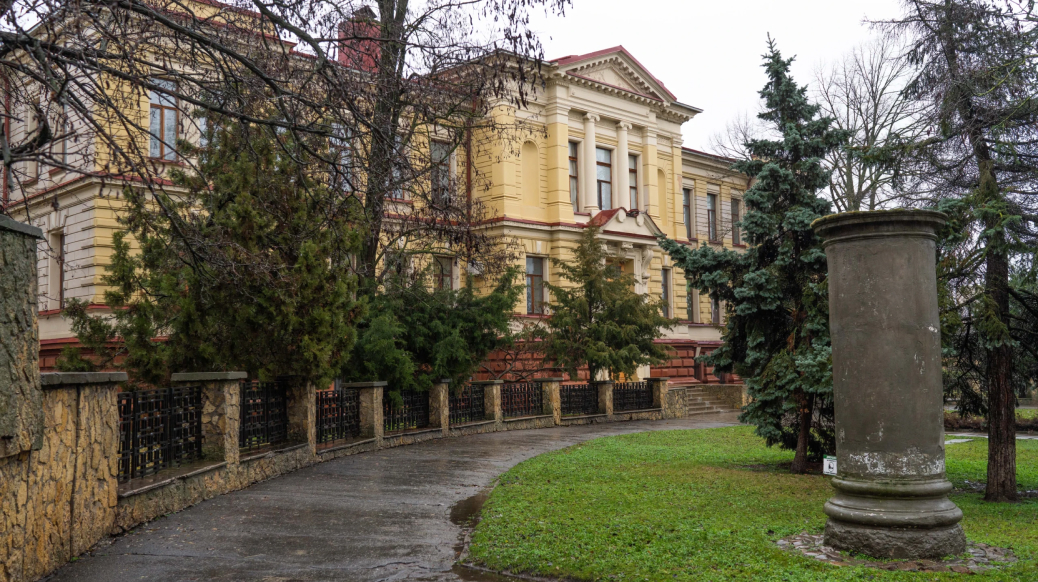
Kherson Oblast lies on the shores of the Black Sea, and therefore has a rich history. Its territory was home to a variety of peoples that left here artifacts from various eras: the Stone Age, the Copper Age, the Bronze Age, Scythians, Sarmatians, Greeks, Cossack units, and the medieval Tiahyn fortress. All exhibits from the excavations were stored in this museum. The collection included over 200,000 items and was constantly replenished.
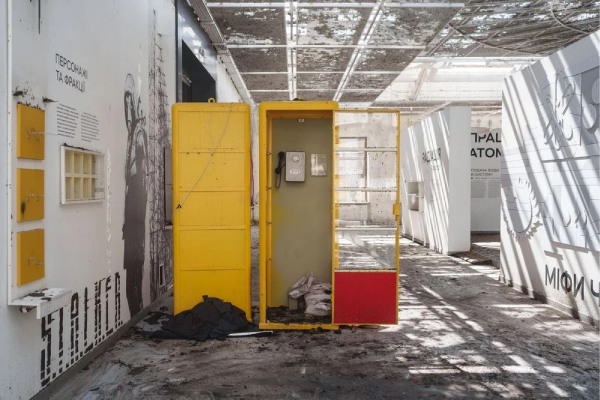
We visited the museum less than a month after the liberation of Kherson. The city began to return to normal life, but the Russians set up firing positions on the left bank of the Dnieper river and began indiscriminate shelling. The museum is located two blocks from the river, and despite the loud sounds of strikes, employees come to work and conduct an inventory of the exhibits that the Russians did not have time to get their hands on.
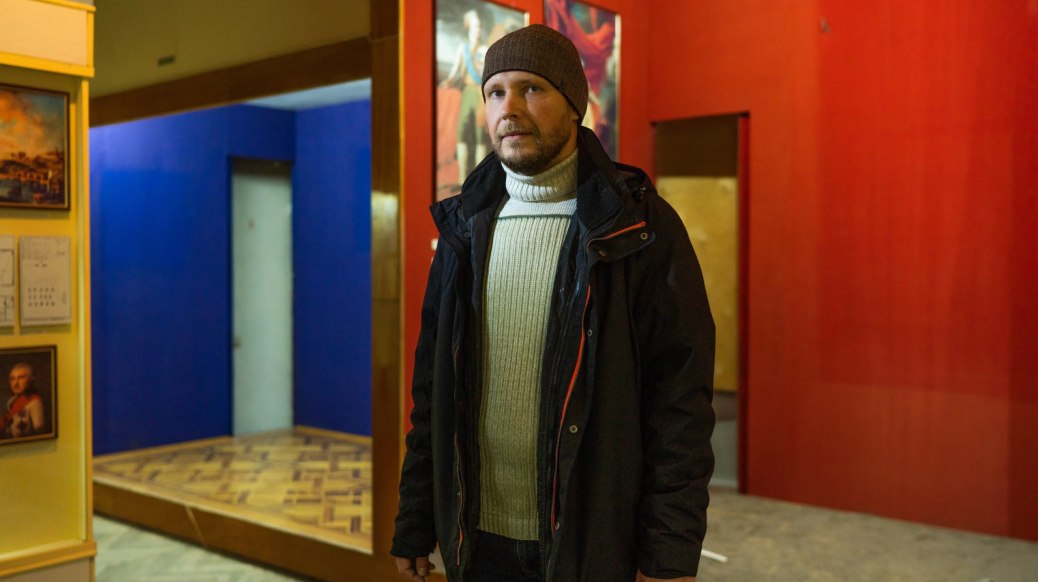
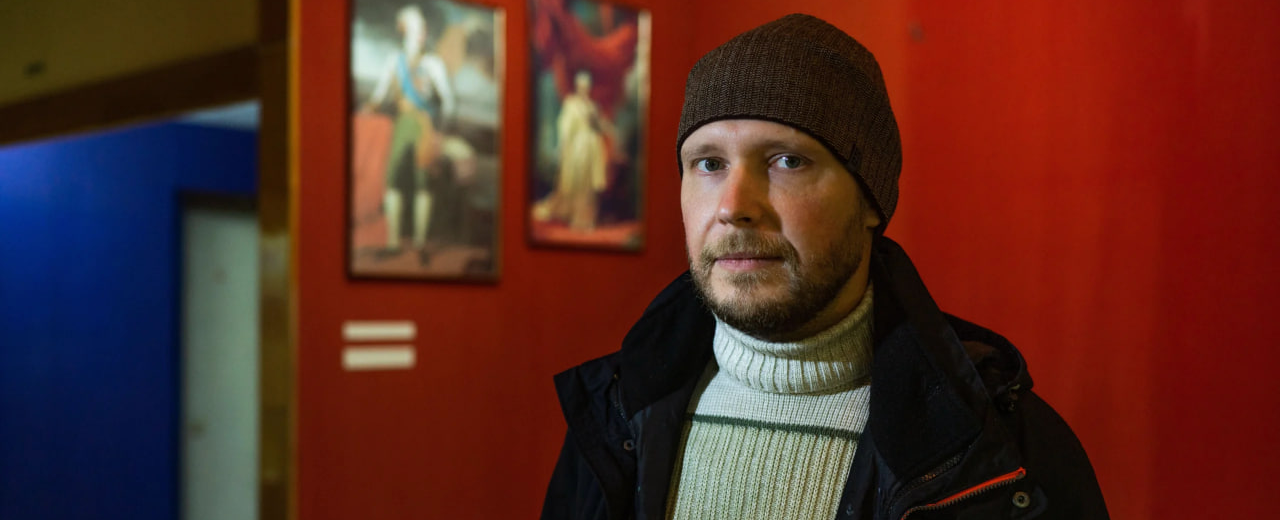
Denys Sikoza, deputy head of the Oblast Inspectorate for the Protection of Historical and Cultural Monuments, gave us a tour of the robbed museum. Denys lived in occupied Kherson until August, when he managed to leave, but on the third day after the liberation of the city, he returned and went right back to work.
The logic is simple enough: the Russians took relatively light exhibits, not too delicate, which is why the flora and fauna collection, Polovtsian statues, heavy tombstones, cannons, and anchors remained intact.
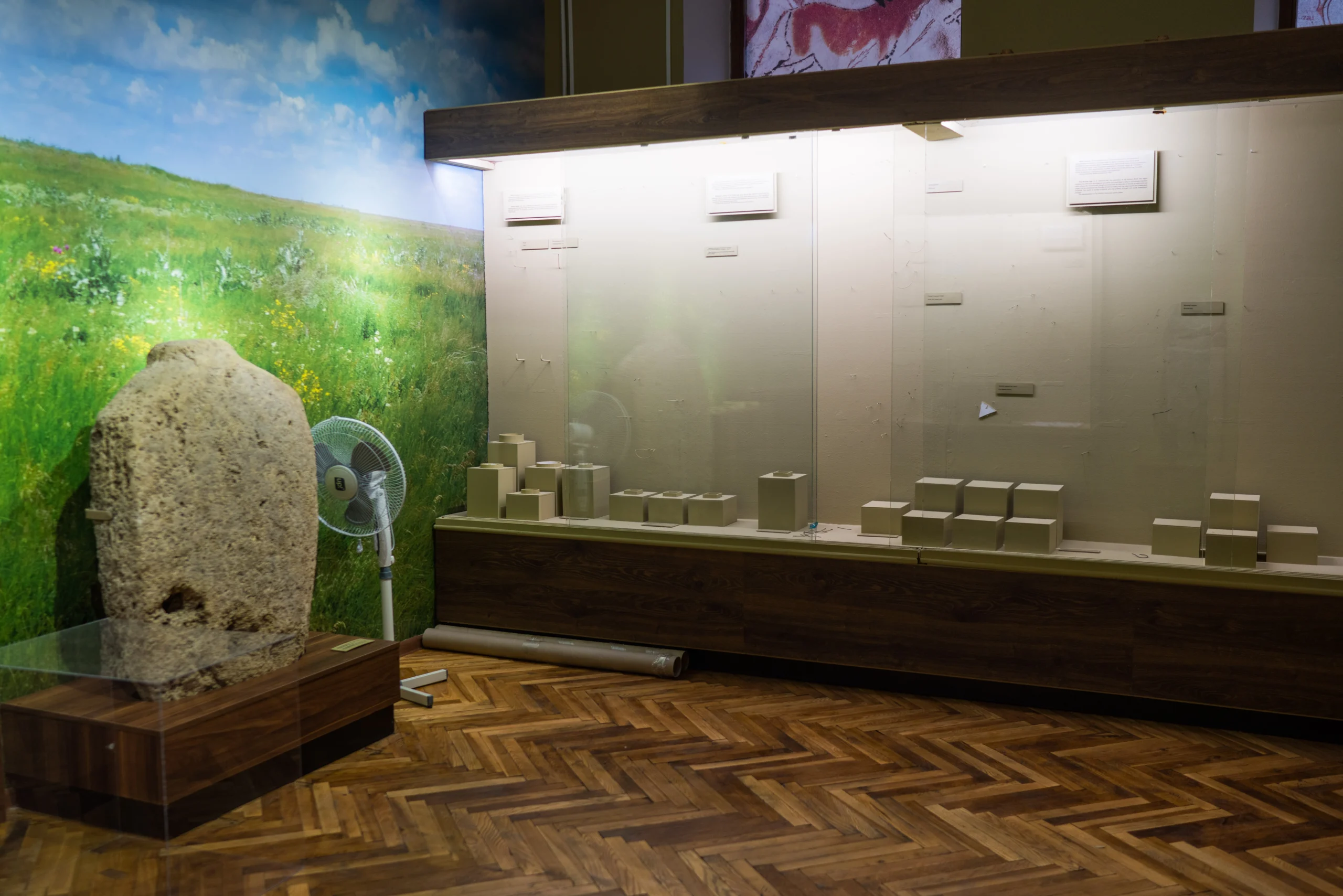
The first room is the Stone Age, the Copper Age, the Bronze Age. Empty showcases, nothing but captions. The Russians robbed this room clean, stealing even modern models of mammoth hunters.
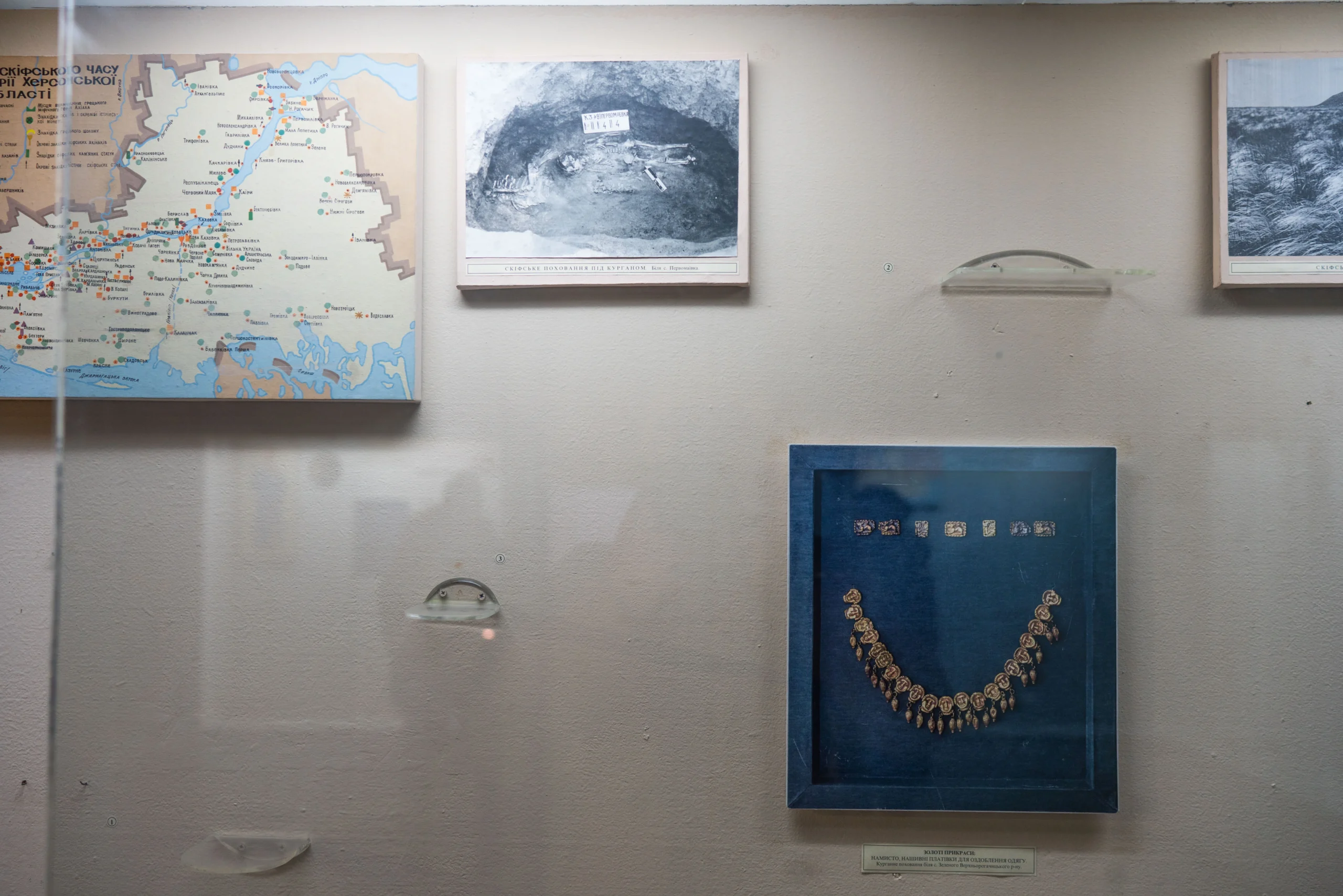
The second room is dedicated to early Iron Age nomads, Scythians, Sarmatians, Chernyakhiv culture. It’s empty as well. Instead of exhibits made of precious metals, it’s only their pictures.
The third hall is about the metropolises of the Northern Black Sea region: Olbia, Panticapaeum, Chersonesus. Almost everything was stolen. One sepulchral stele from Panticapaeum turned out to be too heavy, so they just overturned it.
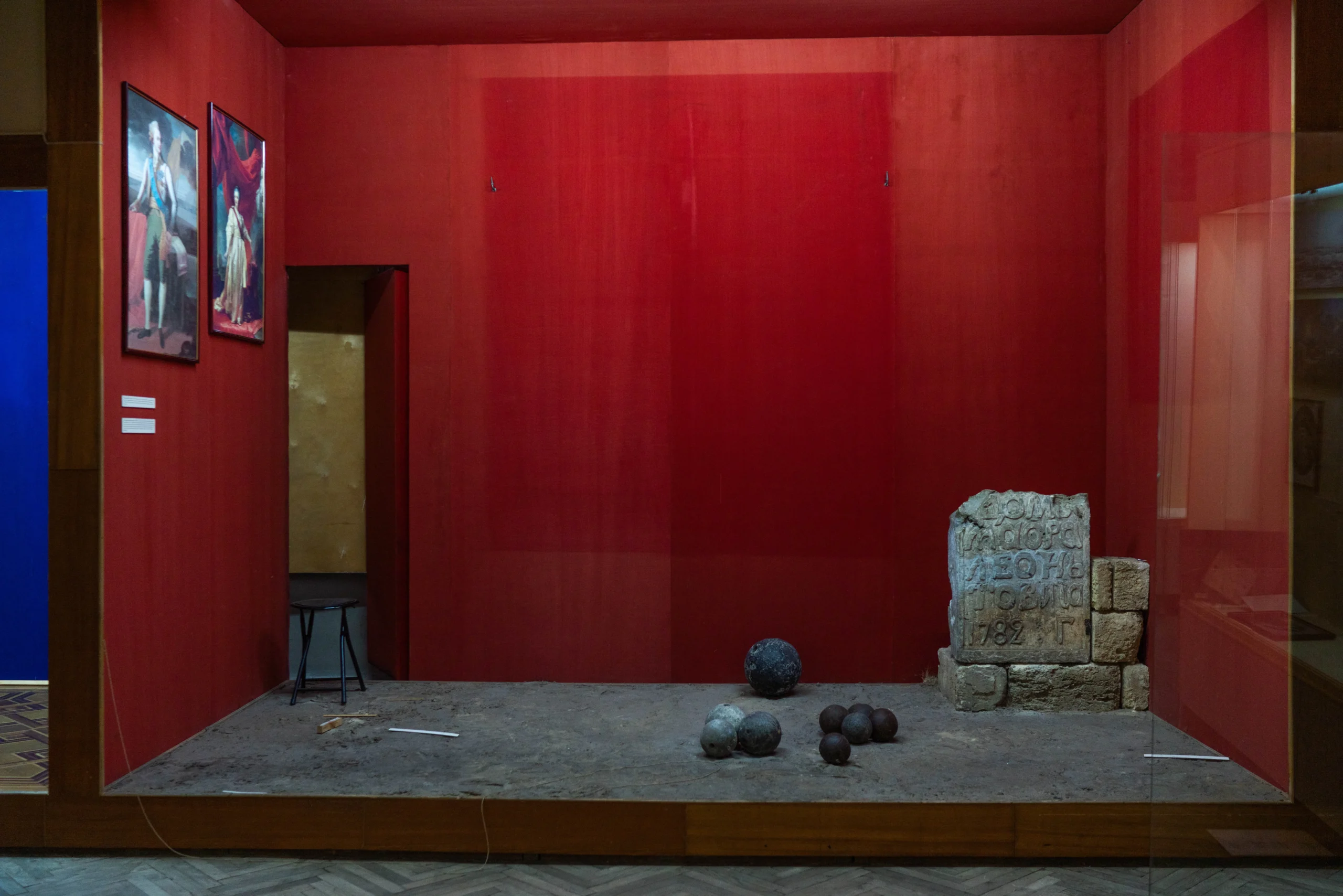
The fourth room is about Huns, Avars, Kyivan Rus, Lithuanian and Tatar fortresses. They didn’t even skip the exhibit dedicated to Mazepa and Kamianska Sich — they stole weapons, pipes, glass decanters.
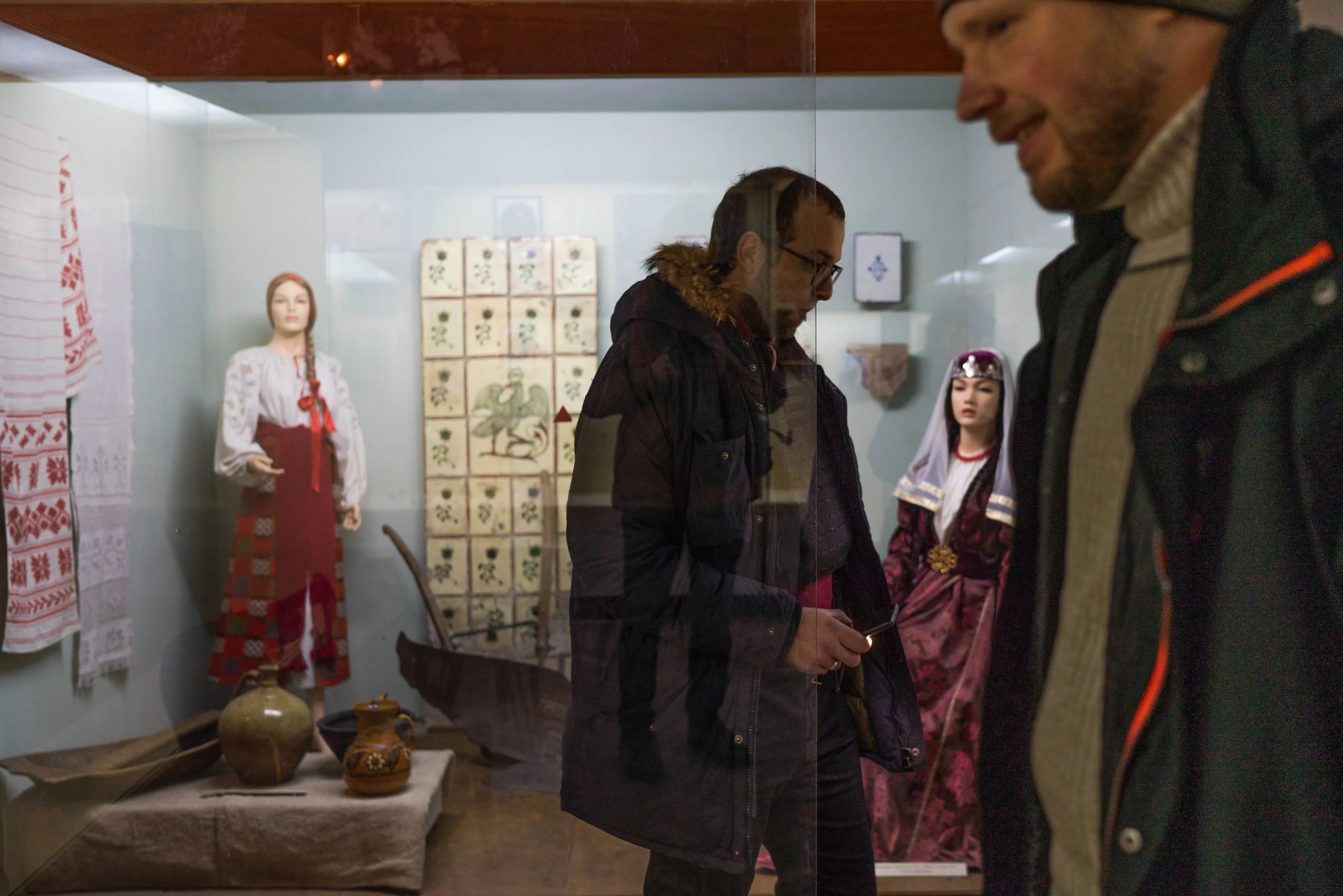
The fifth room is dedicated to the founding of the city and the ethnic groups of the Kherson oblast. The Russians stole documents, weapons, personal items belonging to the figures of that time. There is a wall with three display cases here — one used to have a model of a cabinet room of the 19th century (stolen), the second one — a painting of the city center from the end of the 18th century and two mannequins wearing a Russian officer uniform and clothes of a court lady (stolen). The third one had mannequins wearing Ukrainian and Crimean Tatar ethnic clothing (left behind).
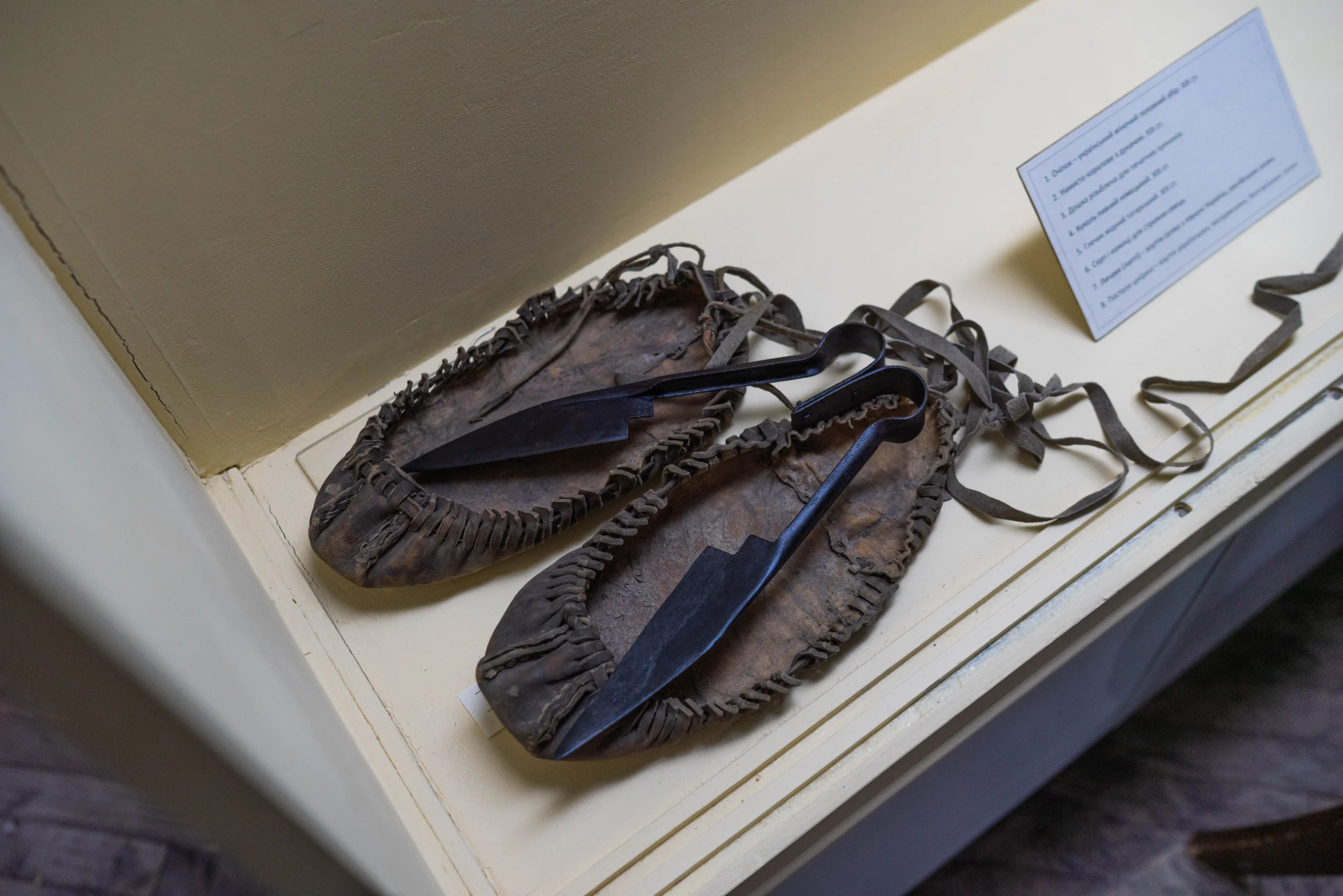
Russians also did not steal lapti, russian bast shoes. This shows some historical continuity, given that contemporary occupiers are happy to steal Ukrainian combat boots and leave theirs behind instead.
On the second floor, they took everything they could lift from the “People and Weapons” exhibition (from the Stone Age to modern times). This room hosted unique cold arms and firearms: medieval, Japanese and Chinese swords, sabers, muskets of the Cossack era.
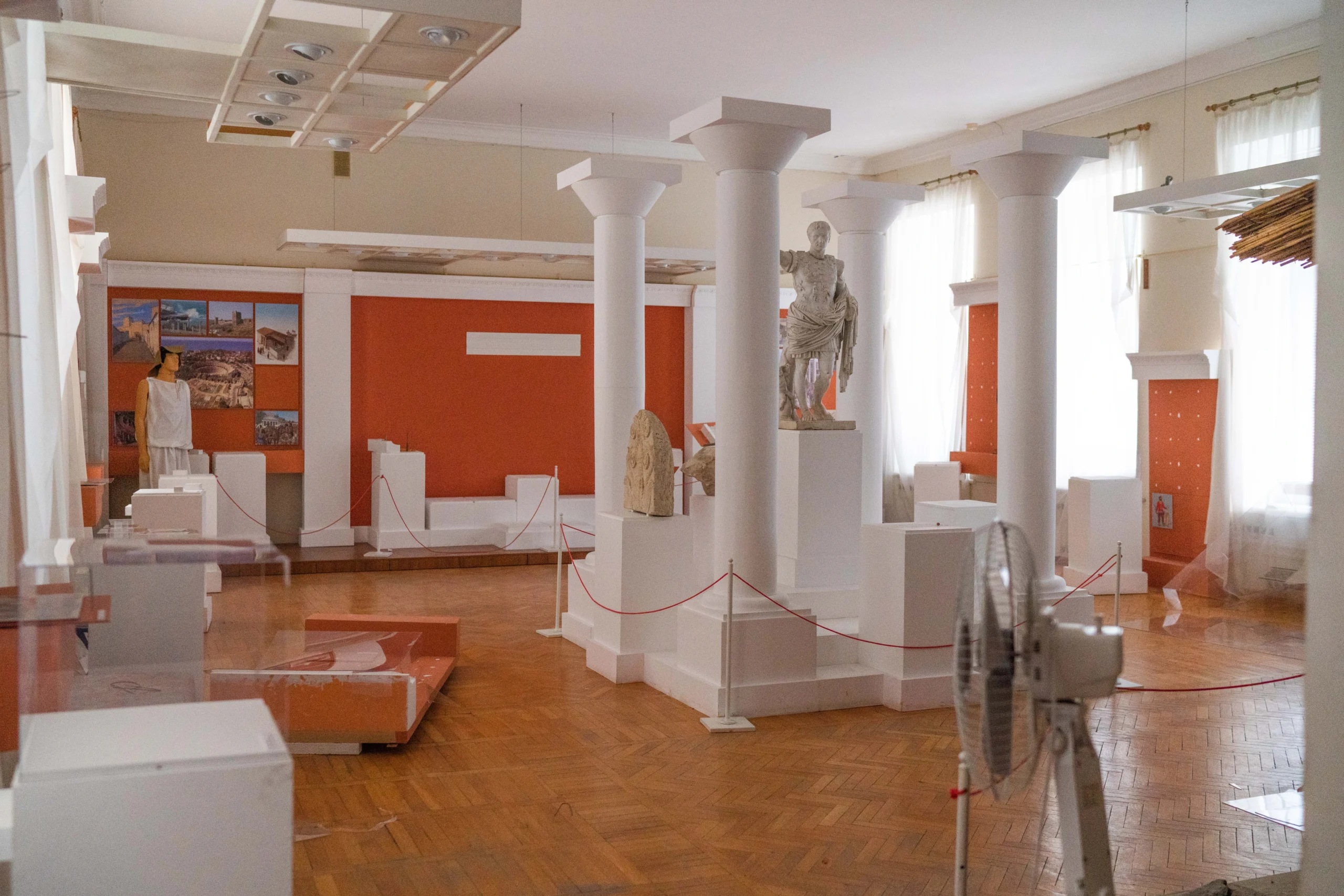
In the “Steppe Hellas” room, there were many exhibits dedicated to the ancient Greeks and the nomads of that time: amphorae, statuettes, dishes, architectural elements of temples. The room is almost completely looted. During the dismantling, the Russians broke a Roman glass cup and a pot from the 5th century from the Chernyakhiv burials. They were left there, broken. In the middle of the hall stands a reduced copy of the 19th century statue of Octavian Augustus, looking at the disaster left behind by 21st-century barbarians.
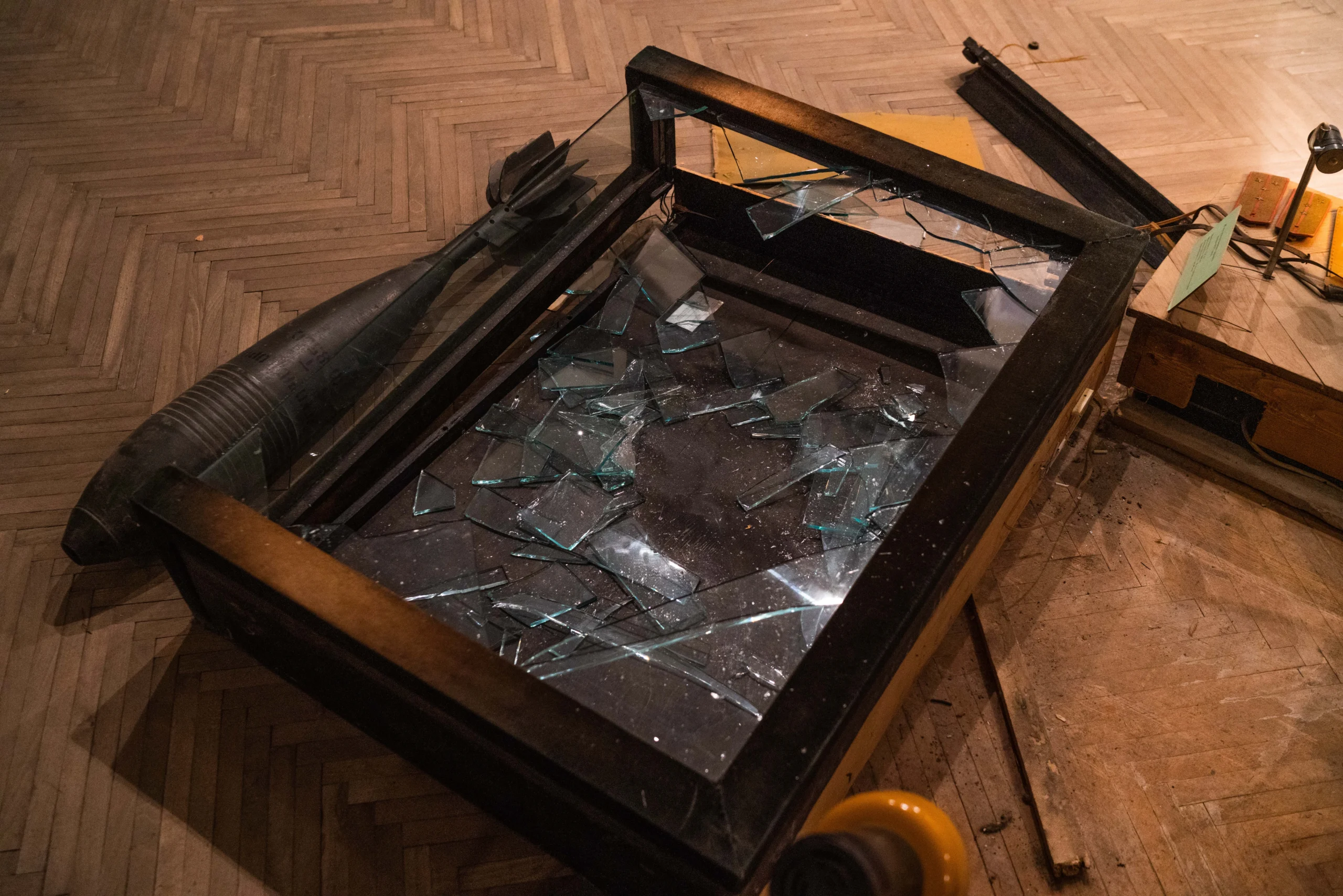
From the room dedicated to World War II, they stole all orders — both Soviet and Nazi, as well as all small weapons and personal belongings of war heroes. There is great doubt that the exhibits were marked in some way and the thieves themselves know to whom the items belonged. It all looks like a chaotic theft.
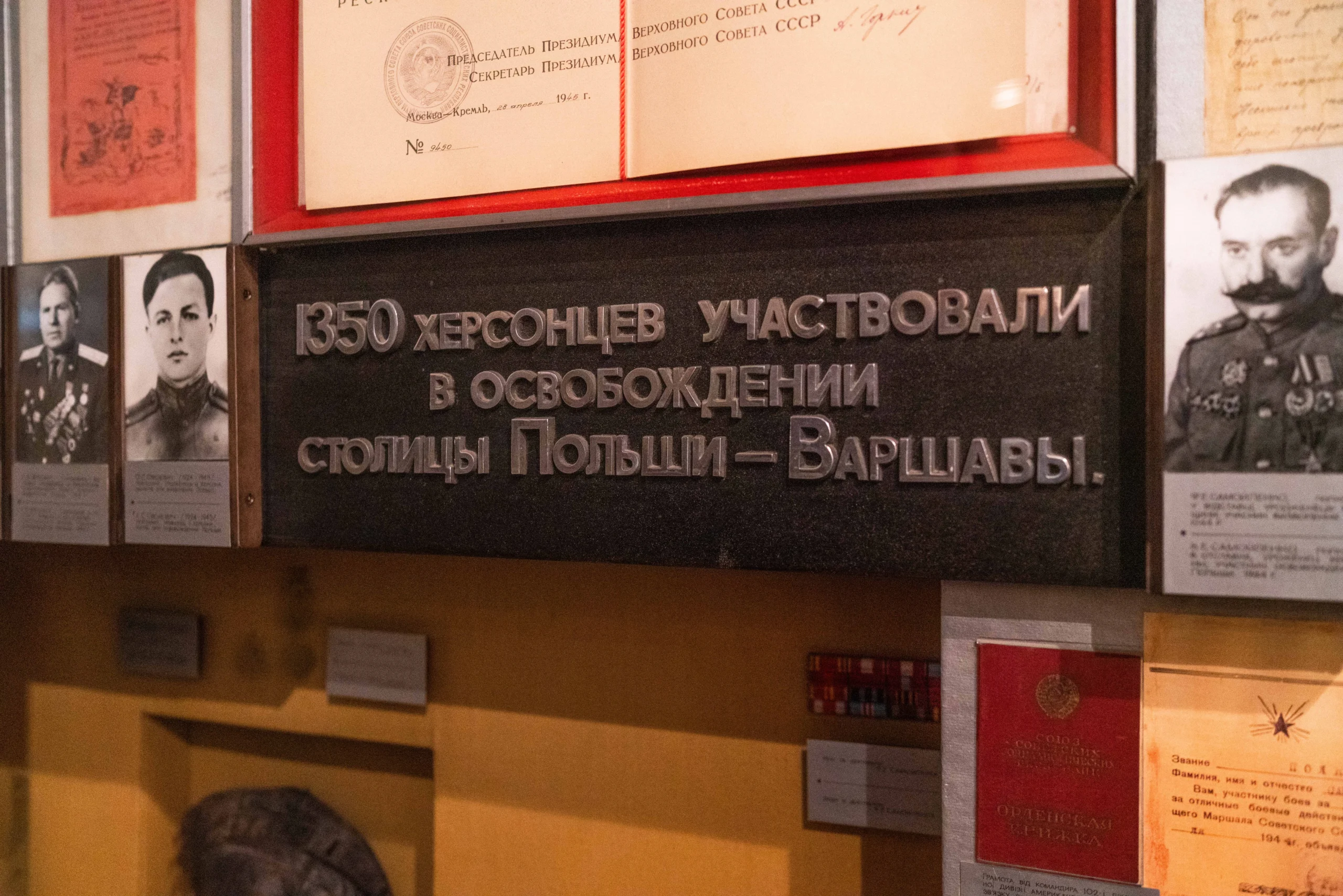
The signs in this room take on a different meaning in the context of today’s events. Here’s one: “Mass destruction of the civilian population, prisoners of war, economic exploitation, terror, and lawlessness caused the population to hate the invaders. Hundreds of thousands of Ukrainians, including those from Kherson, participated in the resistance to the Nazi occupation regime.”
Denys says that it is difficult to estimate how many exhibits have been stolen precisely. The museum usually exhibits the most interesting items in the permanent exhibition, which has been almost fully stolen, including the most unique items from the ancient Sarmatian and Hunic collections, as well as the Leox tombstone depicting one of the first images of an Amazon, that is, a Scythian woman warrior.
If the director had not been a collaborator and had packed the most valuable things into the vault, the occupiers would not have succeeded in robbing the museum so quickly.
During World War II, the history museum did not have time to evacuate, either, and the exhibits were also stolen at that point. Some collections were only returned in the ‘90s. For now, we can only hope that this time, the stolen items will also eventually be returned. You could symbolically exchange them for Russian lapti. To each their own.
This report has been developed within the project supported by the Public Affairs Section of the U.S. Embassy in Ukraine. The views of the authors do not necessarily reflect the official position of the U.S. government.